
Blogs & News
- Category: Laboratory
- DATE: April 20, 2026
What is a Laboratory Bench? Exploring Different Types
A laboratory bench, sometimes called a laboratory workbench or lab workbench, is more than just a simple table. It is a core component or foundation of the modern laboratory environment, supporting equipment, housing storage, integrating utilities, and helping maintain lab safety, workflow, and data integrity in research.
In practical terms, a bench in a scientific setting is the physical platform where experimental procedures, sample preparation, chemical analysis, and documentation all occur. From bench top experiments in education labs to complex industrial, pharmaceutical and chemical research facilities, it anchors nearly every hands-on activity.
Why laboratory benches are fundamental to scientific research
Scientific work depends on stability, organization, and repeatability. A properly designed lab bench:
- Provides a durable work surface that resists chemicals, heat, and abrasion
- Supports laboratory equipment such as centrifuges, balances, and microscopes
- Organizes lab tools, reagent racks, and documentation materials
- Creates structure for data collection and documentation
- Improves safe sample handling techniques
Stable work surfaces, cleanable materials, and organized layouts help reduce risk exposure and contamination events in research settings, especially when labs follow established lab safety protocols. Proper infrastructure leads to reliable workflows, ultimately reducing preventable errors.
At H2I Group, laboratory benches are one part of a broader strategy that connects furniture, infrastructure, and workflow. Through integrated laboratory solutions, H2I Group supports healthcare, education, STEM, and research organizations with bench systems that fit long-term operational goals.
Key Features and Components of Laboratory Benches
A high-performing laboratory bench includes structural, functional, and ergonomic features for both safety and efficiency.
Surface materials
The work surface is the defining feature of a lab bench. Common materials include:
- Epoxy resin for chemical and heat resistance
- Phenolic resin for durability and moisture resistance
- Stainless steel for cleanrooms and wet lab applications
- Laminate for general academic settings
- Polypropylene for wet labs and chemical resistance
Material selection affects quality control, contamination risk, and maintenance requirements. In many lab environments, surfaces must be nonporous, cleanable, and compatible with common disinfectants and chemicals.
Utility integration
Modern lab workbenches often integrate:
- Electrical outlets
- Data ports
- Service fixtures for gas, water, vacuum, etc.
- Compressed air lines
Notably, utility integration reduces cord congestion and leads to better lab space optimization, especially in settings with instrumentation-heavy workflows.
Accessibility and ergonomics
Ergonomics are a top concern in high-use environments. Adjustable heights, accessible storage, and anti-fatigue support help reduce strain and improve task efficiency, preventing the effects of poor workstation design. Thoughtful workstation designs help ensure spaces are ADA compliant for a wide range of individuals.
Modular and mobile configurations
In increasing measure, facilities are adopting modular lab setups. Flexible, reconfigurable benches allow labs to evolve as research priorities shift, equipment changes, and funding cycles drive new projects.
H2I Group offers mobile lab benches designed to adapt to changing research layouts. Our approach is tailored to universities, healthcare facilities, and R&D environments that need to modify work zones across different studies and operational demands. We also offer mobile cabinets, which can be integrated with our mobile lab benches to further improve space flexibility.
Ergonomic Design and Material Selection for Laboratory Benches
Laboratory professionals spend hours standing, pipetting, analyzing samples, and documenting results. Benches that are too high, too low, or poorly arranged can increase fatigue, slow work, and increase the chance of mistakes.
An effective approach to ergonomic lab design accounts for:
- Adjustable benches for seated and standing tasks
- Practical reach zones for instruments and lab tools
- Adequate lighting for data collection and analysis
- Clear legroom and knee space
For Safety Officers and Lab Managers, ergonomics can also be linked to stronger lab safety and smoother training, since standardization helps teams follow consistent processes.
Material selection: durability, cleanliness, and sustainability
Material choice influences durability, cleanability, lifecycle cost, and environmental impact. The most common options include:
- Epoxy resin for resistance to acids and solvents
- Stainless steel for sterile conditions and wet lab work
- Chemical-resistant laminate for cost-controlled academic labs
In wet lab settings, moisture resistance matters because it can minimize degradation and make cleaning more consistent. This is especially relevant in biological studies, where contamination control is part of daily operations.
Sustainability is also becoming a more common factor in the selection process. Many institutions now prioritize sustainable options such as low-emission composites, durable steel frames, and materials with longer replacement cycles.
When it comes to lab furniture selection, decision-makers typically weigh:
- Chemical resistance and cleanability
- Load capacity for heavy laboratory equipment
- Maintenance needs over time
- Lifecycle cost and replacement timelines
Integrating Laboratory Benches into Lab Design
A well-planned laboratory design integrates benches into the broader workflow of the facility. Some of the most common integration strategies are:
- Zoning for wet lab, dry lab, and instrumentation areas
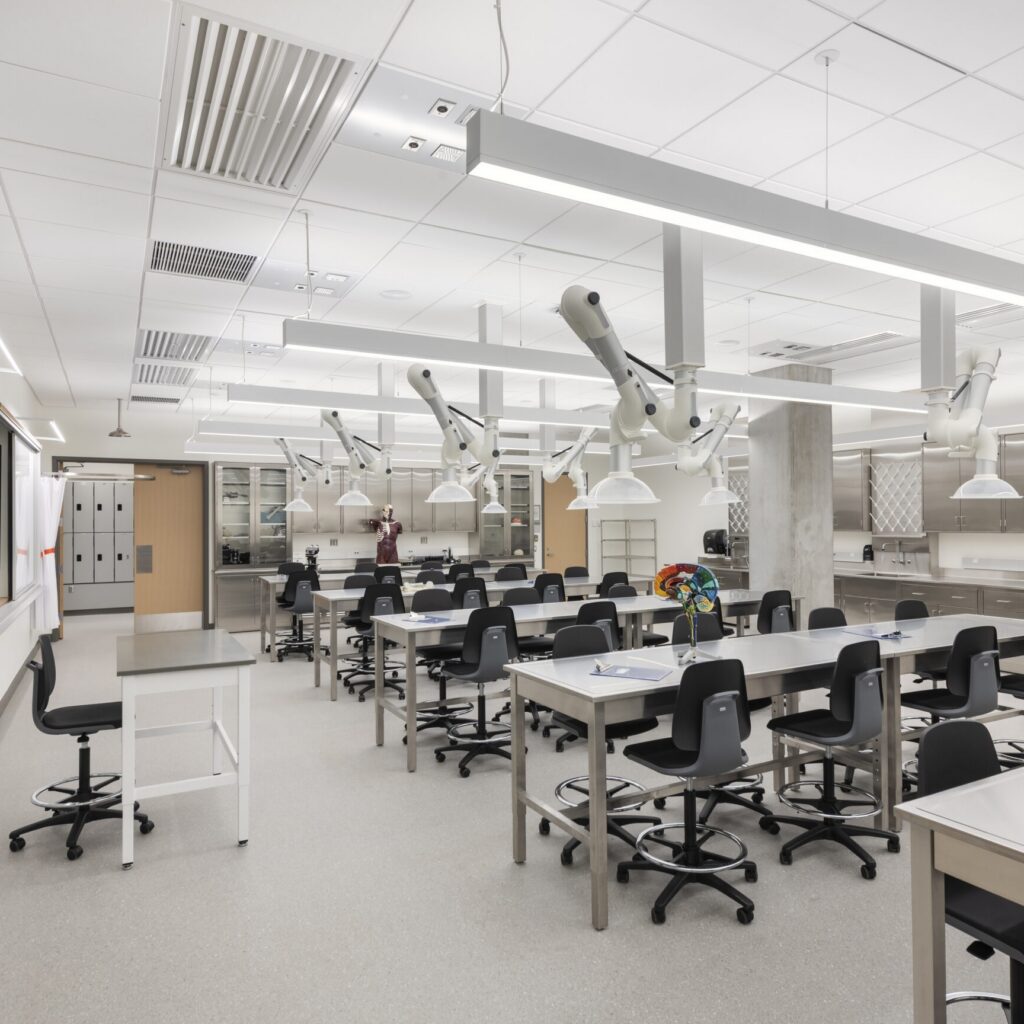
- Aligning benches with ventilation and fume hood placement
- Maintaining clear circulation paths for safety and access
- Locating storage near work zones to support workspace organization
Poor bench placement can interfere with experimental procedures and raise friction in routine tasks. Thoughtful lab space optimization, on the other hand, reduces unnecessary movement, supports safer handling, and keeps work more consistent across shifts.
Trends in modern laboratory bench design
Modern trends emphasize adaptability and technology integration:
- Modular lab setups that allow fast reconfiguration
- Adjustable benches that accommodate multiple users and tasks
- Better cable management for instrumentation-heavy stations
- Utility integration that supports sophisticated lab equipment
- More interest in sustainable lab materials for long-term facility planning
Laboratory Setup and Design Best Practices
Effective laboratory management often involves coordination between owners, CMs, GCs, architects, and subcontractors. Bench selection and placement should align with building systems, safety requirements, and the day-to-day reality of how work happens.
Be sure to follow these best practices:
- Conducting a workflow analysis before installation
- Identifying equipment load and vibration requirements
- Planning for future technology upgrades
- Using layout consistency to support quality assurance in labs
Bench placement should support safe chemical work, appropriate ventilation, and controlled sample preparation zones.
How to choose the right laboratory equipment
When browsing lab benches, decision-makers should think about:
- The type of research, such as chemical analysis, biological studies, or instrumentation-heavy workflows
- The amount of space needed for equipment calibration
- Storage needs for reagents, consumables, and glassware
- Compliance requirements tied to the lab’s purpose and risk profile
- Easy reconfiguration of the workspace
The physical workspace can greatly influence quality control outcomes; stable work surfaces and organized zones reduce variability that comes from clutter, rushed setups, or inconsistent staging.
A solid selection process usually includes:
- Input from Lab Managers and Safety Officers
- A plan for expansion and reconfiguration
- Budget alignment across both capital and maintenance costs
- Facilities Manager
- A reputable manufacturer that is SEFA-rated, which ensures high-quality materials
H2I Group supports facilities with both bench systems and full construction services, from pre-construction planning to installation and ongoing service and maintenance.
The Broader Role of Laboratory Benches in Research, Safety, and Future Innovation
A well-designed laboratory workbench achieves:
- Consistent experimental procedures
- Reliable data integrity in research
- Safer sample handling techniques
- Stronger lab safety protocols
- Better workspace organization
As research complexity grows, benches must meet the challenge of evolving research methodologies and interdisciplinary collaboration. Facilities that plan bench integration as part of overall laboratory design tend to see better long-term performance from their space.
recent blogs


GET STARTED
LET’S TALK ABOUT YOUR PROJECT TODAY
Are you in need of expert guidance for your building project? H2I Group’s experienced professionals are here to assist you with any questions or concerns you may have. Contact us today to learn more about our services and how we can help you achieve your goals.