
Blogs & News
- Category: Laboratory
- DATE: July 14, 2026
How to Design a Lab: What to Know
Designing a lab is about more than choosing benches, equipment, and finishes. A well-designed laboratory supports the people who use it every day. It improves workflow, helps protect users, supports compliance, and gives the facility room to adapt as needs change. Whether the space is used for education, healthcare, government work, research, or industrial testing, the planning process should start with one main question: How will this lab function in real life?
The answer shapes everything from room layout and storage to equipment placement, casework, safety systems, and future flexibility. A lab that looks good but slows down work, creates safety risks, or lacks the right infrastructure can become a long-term problem. A lab designed with clear goals can support productivity, collaboration, and safer daily operations.
What Is Laboratory Design and Why Is It Important?
Laboratory design is the process of planning a lab’s layout, systems, furniture, equipment, safety features, and workflow. It connects the physical space to the work being done inside it.
In a classroom lab, that may mean creating a safe, visible, and flexible space where instructors can supervise students. In a research lab, it may mean planning for specialized equipment, chemical storage, fume hoods, biosafety cabinets, and clean work zones. In a healthcare or government lab, it may mean balancing safety requirements with efficient movement through the space.
The best lab design decisions are made early. Lab managers, scientists, teachers, facility leaders, architects, engineers, construction teams, and specialty partners may all have input. Each group sees the space from a different angle. Scientists and instructors understand the daily work. Facility teams understand maintenance and utilities. Architects and engineers coordinate the building systems. Specialty partners help align casework, equipment, storage, and installation with the lab’s needs.
A lab’s layout can affect how people move, where materials are stored, how safely chemicals are handled, and how easily equipment can be accessed. Strong planning and collaboration helps the lab operate more smoothly from the first day it opens.
Core Principles of Laboratory Design
Most successful labs are built around three core principles: safety, efficiency, and flexibility. Safety comes first because labs often include chemicals, biological materials, heat sources, sharp tools, heavy equipment, or other hazards. A safe design gives users enough room to work, separates incompatible activities, supports proper ventilation, and makes emergency equipment easy to access.
Efficiency is also central to good lab layout planning. The space should match the natural flow of work. Users should be able to move from one task to the next without unnecessary steps, awkward turns, or crowding. Storage should be close to where materials are used. Equipment should be placed where it supports the process, not where it simply fits.
Flexibility helps the lab stay useful over time. Research needs change. Class sizes shift. Equipment gets updated. New safety requirements may arise. A lab with flexible bench systems, mobile tables, modular casework, and adaptable utility access can respond to those changes with less disruption.
Common mistakes often come from planning the room before fully understanding the work. A lab may have too little storage, poor sightlines, limited utility access, or fixed furniture that makes future changes difficult. Another common issue is treating equipment as an afterthought. Large equipment, fume hoods, biosafety cabinets, refrigerators, freezers, and water purification systems all need space, clearance, power, ventilation, and service access.
Ergonomics and Human-Centric Lab Design
Ergonomics plays a major role in laboratory performance. Lab users often repeat the same motions, stand for long periods, sit at workstations, reach for supplies, and work around fixed equipment. If the space is uncomfortable or poorly arranged, it can reduce productivity and increase the risk of strain or mistakes.
Human-centric lab design starts with the people using the space. Benches, tables, seating, storage, and equipment should be arranged to support natural movement. Frequently used supplies should be within easy reach. Work surfaces should be set at appropriate heights. Seating should support posture during detailed work. Walkways should allow people to move safely, even when carts, stools, or equipment are in use.
Ergonomic lab furniture can also support different types of work. Adjustable seating, flexible benching, mobile carts, and height-appropriate workstations help users shift between tasks. In education labs, this may support both lecture and hands-on instruction. In research environments, it may help teams move between computer work, testing, sample prep, and equipment use.
Equipment placement is part of ergonomics, too. A device used throughout the day should not be placed in a hard-to-reach corner. Heavy supplies should not be stored too high. Shared equipment should be positioned so users can access it without disrupting others.
Modular and Collaborative Lab Environments
Modular lab design is becoming more common because many labs need to change over time. A fixed layout may work on day one, but it can become limiting when new programs, research methods, class formats, or equipment needs appear.
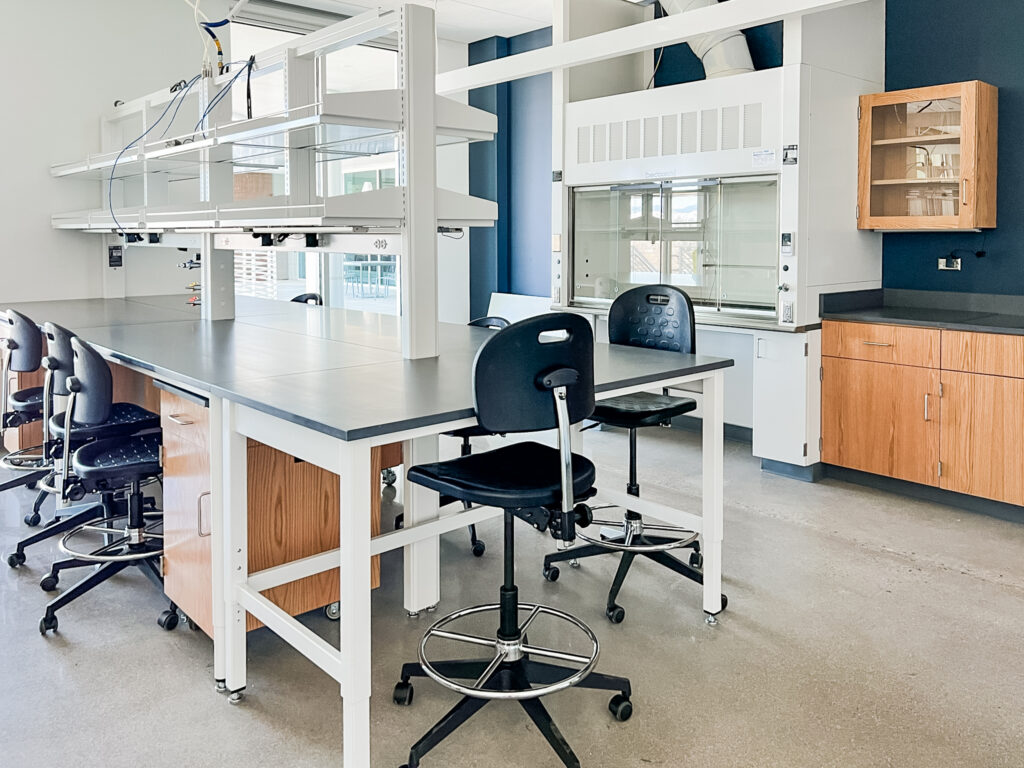
Modular lab systems make it easier to reconfigure the space. Flexible bench systems, mobile tables, movable storage, and adaptable workstations can support a wider range of activities. Instead of rebuilding the space for every major change, teams can adjust furniture and equipment layouts with less downtime.
Collaboration is another major factor. Many modern labs support group research, instruction, demonstrations, team-based problem-solving, and cross-disciplinary work. A collaborative lab environment may include shared worktables, open sightlines, flexible seating, writeable surfaces, and zones for both focused work and group discussion.
The key is balance. Open, collaborative areas should not interfere with safety, containment, or focused work. Wet work, dry work, chemical handling, equipment use, storage, and collaboration areas should each have a clear purpose.
Optimizing Lab Workflow and Space Utilization
Lab workflow optimization begins by mapping how work happens. What materials enter the lab? Where are they stored? What steps do users follow? Which equipment is used most often? Where does waste go? How many people use the space at once?
These questions help reveal the best layout. For example, a lab that handles chemical prep needs safe storage and clear access to fume hoods. A teaching lab may need strong instructor visibility and enough space between workstations. A research lab may need separate zones for sample prep, testing, data review, refrigeration, and cleaning.
Efficient lab layouts reduce unnecessary movement. They keep related tasks close together and separate activities that should not overlap. They also make it easier to supervise, clean, maintain, and restock the space.
Space utilization is not about fitting as much as possible into the room. Overcrowding can make a lab harder and less safe to use. Strong lab space utilization means using the available area intelligently. That may include vertical storage, mobile carts, shared equipment zones, under-counter storage, wall-mounted shelving, or multi-functional workstations.
Technology integration should also be planned early. Labs may need data connections, power access, monitors, automation systems, specialized equipment, or digital teaching tools. These systems affect furniture placement, utility routing, and equipment clearances. A better approach is to coordinate technology, utilities, casework, and equipment as part of the same planning process.
Safety, Compliance, and Equipment Selection
Safety and compliance are central to how to design a lab. Requirements vary based on the type of lab, the materials used, and the work being performed. A school science lab has different needs than a clinical, research, crime, vivarium, morgue, or industrial lab.
Even so, every lab should be planned with clear safety basics in mind. Users need enough room to work. Emergency equipment should be visible and accessible. Chemical storage should be appropriate for the materials being stored. Ventilation and containment systems should match the hazards present. Walkways should remain clear. Equipment should be installed with proper access for use, service, and maintenance.
Chemical storage deserves special attention. Flammable materials, acids, bases, and other hazardous substances may require dedicated cabinets or separate storage strategies. Storage should be organized, labeled, and located where it supports safe handling. Poor storage planning can create clutter, increase risk, and make compliance harder to manage.
Equipment selection should start with the lab’s purpose.
- What work will the lab support now?
- What might it need to support in five or 10 years?
- What equipment is essential?
- What equipment is shared?
- What items need special utilities, ventilation, drainage, or clearances?
Furniture and surfaces matter as well. Laboratory casework, countertops, seating, carts, and tables should be selected based on durability, cleanability, chemical resistance, flexibility, and the type of work being performed. A countertop used for basic classroom activities may not need the same performance as one used with harsh chemicals or heat.
Safety is the result of many decisions working together to create a safe lab for all that use it.
Plan a Lab That Works Now and Later
Designing an effective lab requires careful coordination. Safety, workflow, ergonomics, equipment, storage, utilities, flexibility, and compliance all affect one another. If one area is overlooked, the whole space can suffer.
The best results come from early planning and clear communication between stakeholders. Lab managers, facility leaders, architects, construction teams, scientists, educators, and specialty partners should align on the lab’s purpose before major layout and equipment decisions are finalized.
A strong lab design should answer practical questions:
- What work will happen here?
- Who will use the space?
- How will people move through it?
- Where will materials be stored?
- What equipment is needed?
- What safety systems are required?
- How might the lab need to change later?
When those answers guide the process, the lab is more likely to support safe, efficient, and productive work. It is also more likely to provide long-term value as needs, equipment, and programs change.
H2I Group supports laboratory projects with planning insight, product knowledge, installation experience, and access to a wide range of laboratory solutions. From lab casework and flexible bench systems to fume hoods, storage, seating, and lab equipment, H2I Group helps project teams create spaces built for the work inside them.
For education-focused projects, you can also read more about lab design for schools.
recent blogs
GET STARTED
LET’S TALK ABOUT YOUR PROJECT TODAY
Are you in need of expert guidance for your building project? H2I Group’s experienced professionals are here to assist you with any questions or concerns you may have. Contact us today to learn more about our services and how we can help you achieve your goals.