
Blogs & News
- Category: Seating & Furniture
- DATE: March 26, 2026
WHAT IS TELESCOPIC SEATING?
A gym can transform into an arena in minutes and then return to an open floor just as fast. That flexibility comes from telescopic seating systems, one of the most practical innovations in modern venue design.
Telescopic seating is a retractable, tiered system that extends to create additional audience seating and folds into a stored position when not in use. The platforms slide into one another using a nested design, enabling venues to quickly and safely convert open floor space into structured seating.
Facilities today rarely serve just a single purpose. Schools host athletics, assemblies, and community programs. To handle all the events, venues need to be able to quickly shift between performances, meetings, and exhibitions. Architects and planners increasingly rely on retractable seating systems because they allow spaces to adapt without permanent construction changes.
WHAT IS TELESCOPIC SEATING?
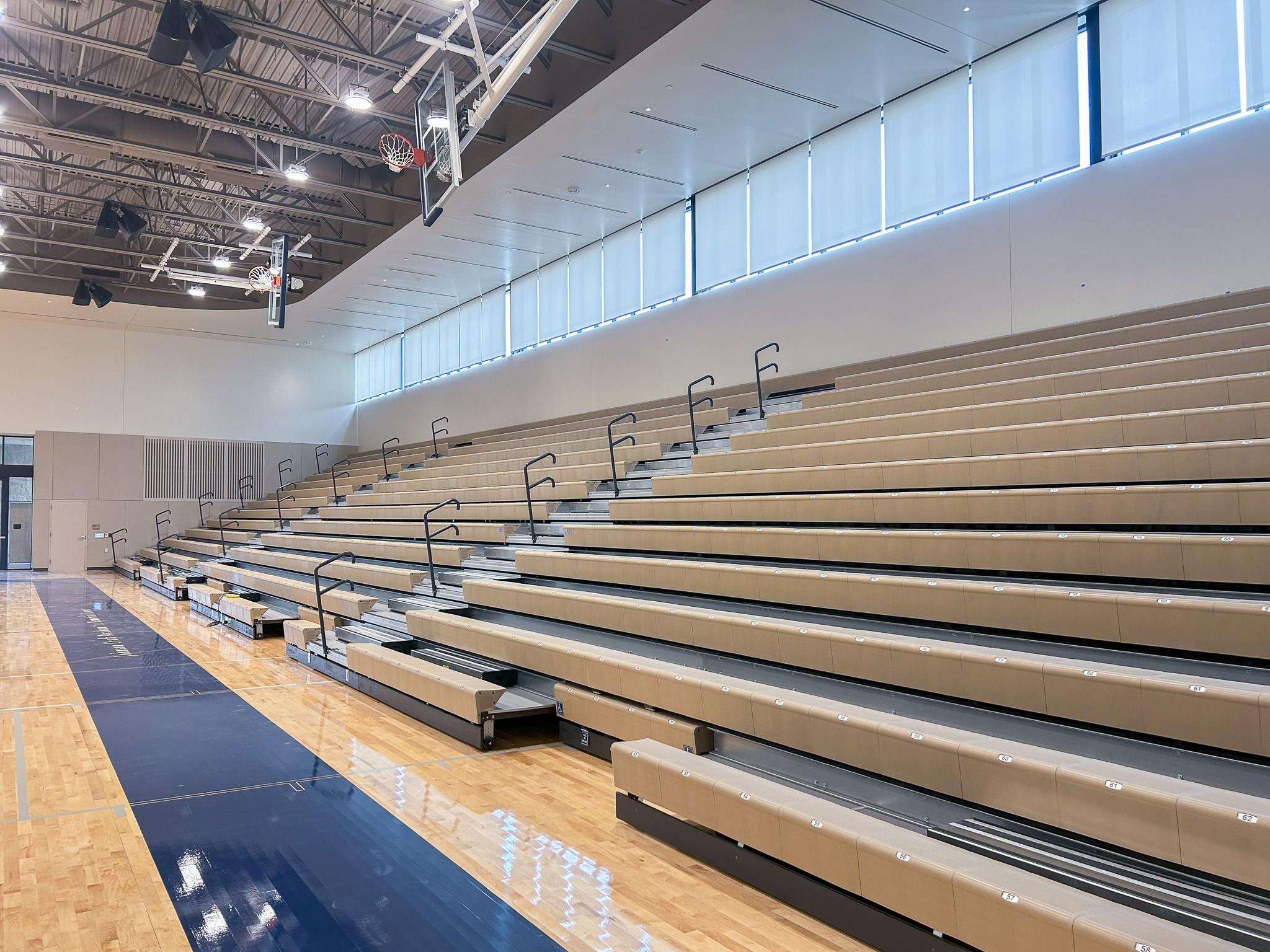
- Structural platforms that move as a connected unit
- Folding or self-storing seats
- Guardrails and aisle safety features.
- Manual or powered operation systems
Why telescopic seating is considered versatile
Traditional seating fixes a venue to a single layout. Retractable platforms allow spaces to adjust based on attendance size or event type. Facilities frequently deploy seating for games or performances, then retract it to create open floors for training, exhibitions, or community use. This flexibility explains why multipurpose venues increasingly adopt telescopic solutions.How it compares with traditional seating
Fixed seating works well in single-purpose auditoriums. Multipurpose facilities often prioritize their need for adaptability instead. Telescopic seating allows operators to adjust capacity without permanent remodeling or additional rooms, which is what would be required with fixed seating.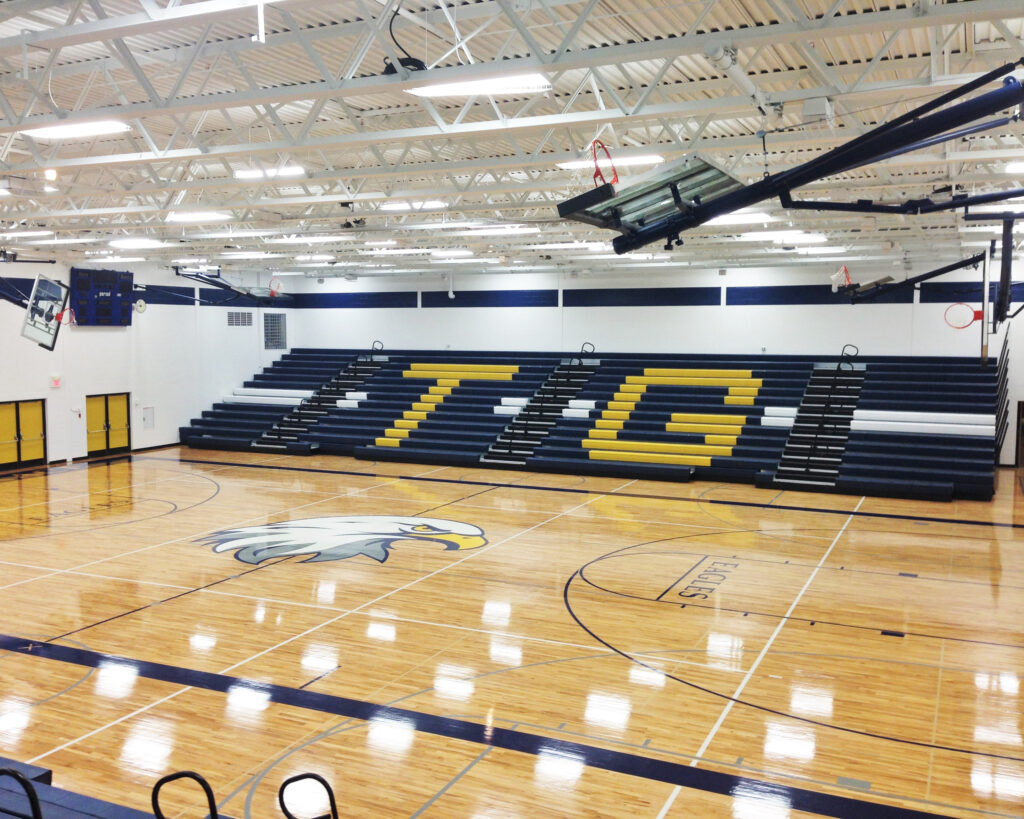
BENEFITS OF TELESCOPIC SEATING
Venue managers often choose telescopic seating because it improves efficiency and expands the usable area.
Space optimization
The most immediate benefit is reclaimed floor space. When seating retracts, gyms and halls become usable for activities that require open layouts.
Telescopic bleachers extend to accommodate crowds and slide flat when not needed, allowing facilities to maximize usable square footage. This flexibility supports:
Athletic practices
Assemblies and ceremonies
Trade shows or exhibitions
Community events
Actual space savings depend on facility layout, storage depth, and how frequently seating configurations change.
Operational flexibility
Facilities rarely host identical events every day. Retractable seating allows staff to scale seating capacity based on demand. Automated systems reduce setup time and labor requirements while enabling faster event turnaround.
Enhanced audience experience
Tiered seating improves sightlines by elevating each row above the one in front of it. Modern systems also offer upgraded comfort options, including chair-back seating and integrated aisle lighting for safer navigation.
Comfort, safety, and visibility encourage repeat attendance, which is important for schools, venues, and community facilities alike.
MAIN CHARACTERISTICS OF TELESCOPIC SEATING SYSTEMS
Most telescopic seating installations share several defining characteristics that influence planning and performance.
Tiered platforms designed to improve sightlines
Compact stored footprint along a wall or recessed area
Manual or powered deployment options
Integrated guardrails and safety features
Configurations that support accessibility requirements
DESIGN AND INSTALLATION OF TELESCOPIC SEATING
Installing telescopic seating requires coordination between architects, engineers, and seating specialists.
Design considerations
Planning teams evaluate several factors early in the process:
Available floor space and ceiling clearance
Desired seating capacity
Emergency exit pathways
Accessibility requirements
Sightline performance
Any extra upgrades such as graphics, logos, and premium seats
Because each venue has different spatial constraints, most telescopic systems are custom engineered to fit the environment. Requirements vary depending on local building codes and venue design. Once design requirements are confirmed, design drawings are completed for approval.
Step-by-step installation process
Installation typically begins with a detailed site evaluation to confirm the shop drawings checking information such as measurements, floor conditions, game line locations, type of flooring, as well as any obstructions. During assembly, the structure is built and seat modules are attached. Then each platform section is positioned in the proper location. The installers test to confirm the proper extension, retraction, and if it is safe for operation.
Electrical components are connected for powered systems, followed by calibration of safety features such as limit switches and obstruction sensors. Before handoff, technicians perform multiple operational tests and staff training to ensure safe daily use. Proper commissioning helps prevent premature wear and supports long-term system reliability. Upon completion, the staff would be trained on how to use properly use the equipment.
A quick overview of the installation stages
Stage 1 – Site measurements and layout planning
Stage 2 – Shop Drawing Review and Approval
Stage 3 – Installation
Stage 4 – Operational testing and safety verification
Stage 5 – Training on Proper Usage
Professional installation ensures smooth movement and long-term durability. Proper planning also helps facilities meet building and safety requirements.
Best practices for maintaining telescopic seating
Telescopic seating systems are designed for heavy use, but routine inspections are still important. Recommended upkeep to ensure longevity and optimal performance includes:
Checking moving components
Lubricating mechanical parts
Cleaning seating surfaces properly
Scheduling periodic safety inspections
Pro Tip: These periodic maintenance and safety inspections should be dated, documented, and retained for your records.
Well-maintained systems can operate reliably for decades in high-traffic environments. Ongoing inspections and operational checks play a major role in system longevity.
TELESCOPIC SEATING IN DIFFERENT VENUES
The adaptability of telescopic seating allows it to serve many industries.
Schools and educational facilities
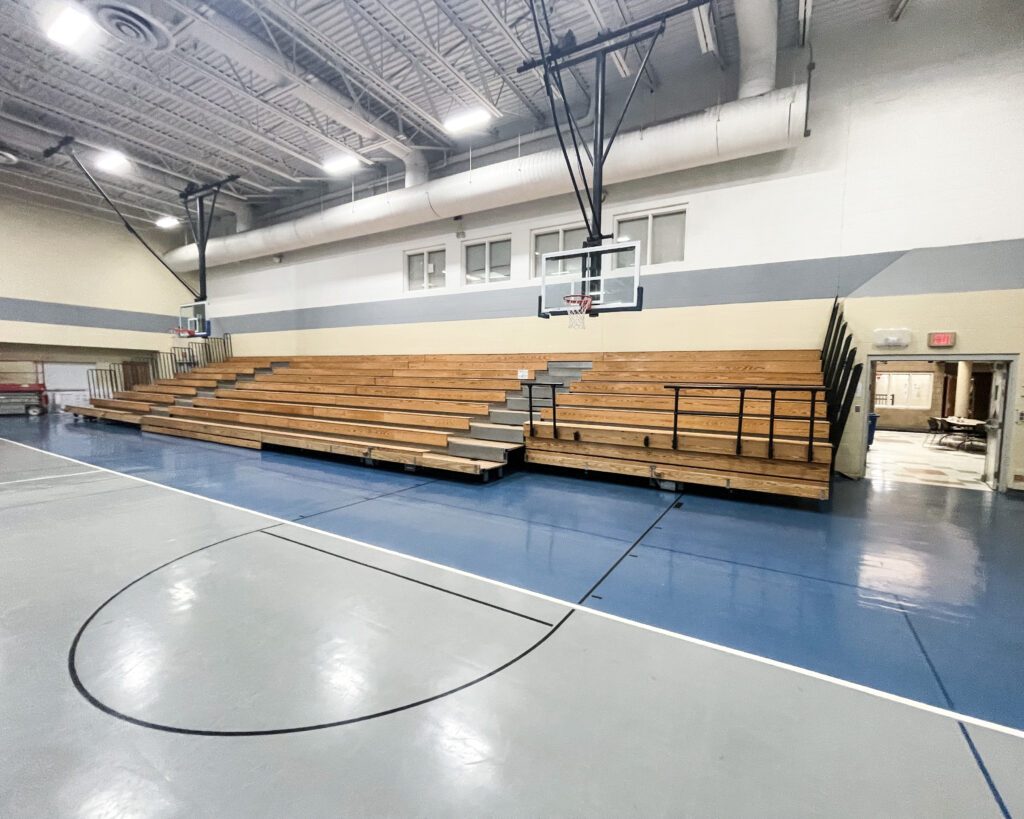
School gyms must support athletics, assemblies, performances, and testing environments. Retractable bleachers allow seating for games while preserving open space for daily activities. Many schools rely on telescopic seating to expand programming without expanding their building size.
Event venues and theaters
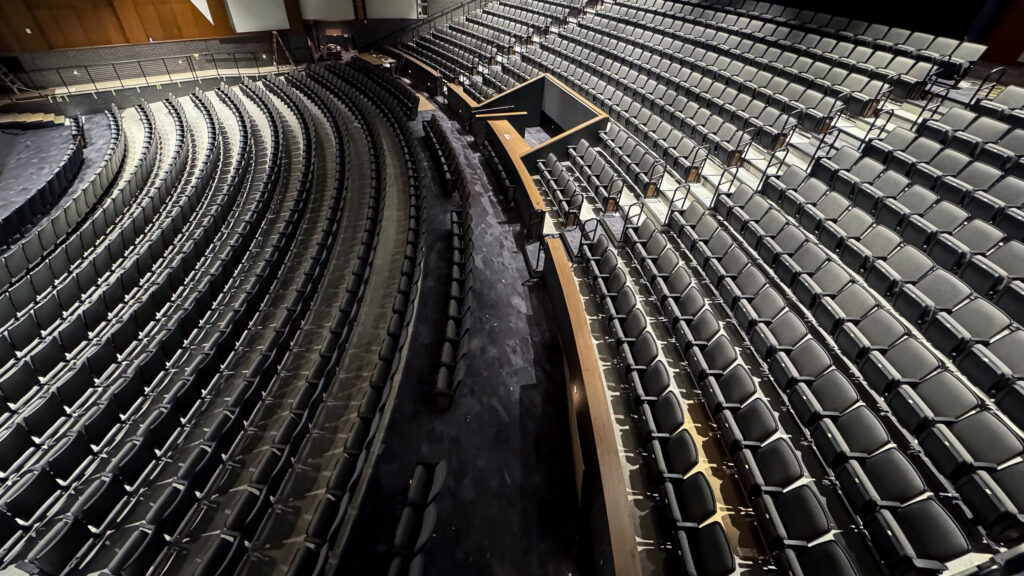
Performing arts spaces benefit from adjustable seating capacity. Seating can expand for performances and retract for rehearsals or exhibitions. Some venues even deploy partial seating layouts to match different production styles.
Sports facilities and arenas
Sports venues often host multiple activities requiring different viewing angles. Adjustable seating configurations help improve spectator engagement while maintaining flexibility across athletic events.
HOW DOES TELESCOPIC SEATING COMPARE?
Choosing seating involves balancing flexibility, cost, and long-term usability.
Telescopic seating vs. fixed seating
Fixed seating provides permanence but limits adaptability. Telescopic seating allows venues to recover floor space instantly and supports a wider range of activities.
Compared with other movable seating
Portable seating solutions require storage areas and manual setup and breakdown. Telescopic systems remain integrated into the building, allowing faster deployment and a cleaner appearance.
Why telescopic seating improves space efficiency
Stackable chairs and temporary risers demand labor and storage planning. Telescopic seating keeps seating built into the venue itself, reducing setup complexity.
WHEN FACILITIES CHOOSE TELESCOPIC SEATING
Facilities often select telescopic seating when a space must serve multiple purposes throughout the week. Schools alternating between athletics and assemblies benefit greatly from retractable layouts. Community centers that host a variety of events see similar advantages.
Fixed seating might still suit single-purpose auditoriums with consistent attendance. During planning, designers typically evaluate floor usage frequency, event diversity, and storage limitations before choosing the best solution.
FLEXIBLE SEATING SOLUTIONS FOR MODERN MULTIPURPOSE VENUES
Modern venues must accomplish more within limited square footage. Telescopic seating supports this shift by allowing spaces to evolve alongside programming needs.
Across schools, arenas, theaters, and community facilities, retractable seating helps organizations host more events without expanding their footprint. Their ability to change layouts quickly improves operational efficiency while maintaining audience comfort.
HOW H2I GROUP CAN HELP
H2I Group works with facilities nationwide to design customized seating solutions that balance flexibility, safety, and long-term performance. Our telescopic bleachers help venues create seating when needed and keep flooring space available when priorities change.
Modern venues are expected to support changing programs, fluctuating attendance, and evolving community needs without expanding their footprint. Telescopic seating helps facilities meet those demands by enabling spaces to transition quickly between events while maintaining audience comfort and visibility.
For many planners and facility managers, the decision comes down to flexibility over permanence. When a space must serve athletics, performances, and community gatherings throughout the year, retractable seating is often the most practical long-term solution.
H2I Group partners with schools, arenas, and multipurpose venues to design seating solutions customized to their specific operational goals. Telescopic bleacher systems help organizations create seating when needed and reclaim valuable space when priorities shift.
TRANSFORM SPACES WITH TELESCOPIC SEATING
If your facility needs to serve multiple purposes without sacrificing comfort or capacity, telescopic seating can provide a practical long-term solution.
Connect with the H2I Group team to explore layout options, customization features, and installation strategies designed for your specific space and event goals.
recent blogs
GET STARTED
LET’S TALK ABOUT YOUR PROJECT TODAY
Are you in need of expert guidance for your building project? H2I Group’s experienced professionals are here to assist you with any questions or concerns you may have. Contact us today to learn more about our services and how we can help you achieve your goals.